

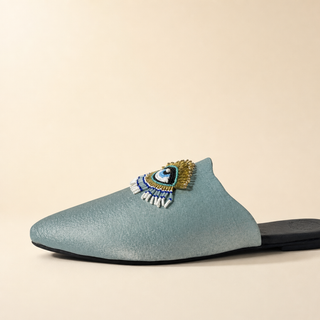
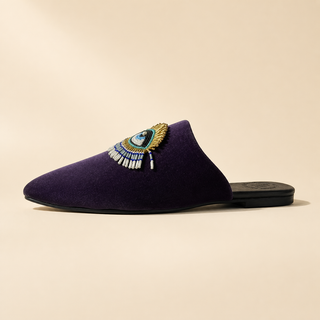
You chose a civil ceremony because you wanted the day to feel like you: a short, meaningful ceremony, the people who matter, then a long lunch that runs into the evening. Your shoes should fit that plan. The best civil ceremony wedding shoes are statement flats: a pointed toe that lengthens the leg, one real detail that shows in photos, and a fit that holds through hours of walking, standing and sitting. Height is optional. Being present for your own wedding is not.
In this guide
- Why flats suit the shape of a civil ceremony day
- What makes a flat a statement flat
- Where your hem should land, outfit by outfit
- Four civil ceremony brides, worked through
- How statement flats photograph
- Five mistakes to avoid
- The week before checklist
- Frequently asked questions
- The styles we would choose for a civil ceremony
Why flats suit the shape of a civil ceremony day
Around four in five Australian couples now marry with a civil celebrant rather than a religious minister, according to the ABS, and many of those weddings are small, short and on the move. A registry office or celebrant ceremony often lasts 20 to 30 minutes. What follows is where your shoes earn their place.
| Part of the day | Typical length | What it asks of your shoes |
|---|---|---|
| Getting ready and travel | 1 to 2 hours | Easy to put on with a dress already on. If your shoe has a strap, do it up before the gown goes on. |
| The ceremony | 20 to 30 minutes | Standing still, often on stone steps or a hard floor, and in every photo. |
| The portrait walk | 45 to 90 minutes | Steps, laneways, pavers, grass. Often a kilometre or more of walking in stop and start bursts. |
| Lunch or dinner | 3 to 5 hours | Sitting, standing for speeches, moving between tables, and a lining that does not rub by hour four. |
Add those together and a civil wedding day is often eight hours on your feet, with the most photographed moments in the first two. A heel you can manage for a ceremony is a different thing from a heel you can walk in for a kilometre and then dance in. A flat covers every row.
Season matters too. A summer portrait walk is usually timed for late afternoon light, after the pavement has been in the sun all day, and an open back mule is cooler than a closed court shoe. In winter, plan the walk around a covered laneway or colonnade in case of showers.
What makes a flat a statement flat
A plain satin ballet flat can look like the pair you changed into. A statement flat looks like the pair you chose. The difference comes down to three things you can check before you buy.
- A pointed toe. A point carries the line of the leg past the end of the foot, which makes a flat look longer and more formal than a round toe. It is the single biggest reason a flat reads bridal rather than casual.
- One detail at the toe. Beading, embroidery or a jewelled motif. Detail at the toe is what shows under a hem and what the camera picks up at standing distance.
- A fabric with a surface. Organza, velvet or textured leather catches light. Flat satin in the same white as your dress tends to disappear in photos.
Our Selene is built on exactly those three points: powder blue organza, a pointed toe and a beaded evil eye at the toe. It also carries your something blue, so one choice covers two jobs.

Where your hem should land, outfit by outfit
With a flat, the hem does more of the work than it does with a heel. Get these lengths right and the shoe will show exactly as much as it should.
- Mini dress: the shoe is fully on show, so this is where a statement flat is at its best. Keep the legs bare and let the toe detail be the one accessory below the knee.
- Tea length or midi: a hem that falls between mid calf and just above the ankle shows the whole shoe and a little ankle. It is the most practical length for a day that includes steps and pavers.
- Wide leg trouser suit: the front of the hem should just touch the top of the foot, with the point of the toe visible. The back should sit about 1 to 2 cm above the ground while you stand. The shoe then appears with each step.
- Floor length gown or column: hem it to finish about 1 cm off the ground in your flats. Take the actual shoes to every fitting from the first one. A gown hemmed for a heel will drag, and you will be lifting it all day.
Four civil ceremony brides, worked through
1. The Friday registry office ceremony
Wear: an ivory wide leg trouser suit, a silk camisole, a short veil or none, and Selene in powder blue organza.
Why it works: a trouser suit is clean and modern, and the shoe is the one soft, romantic note in it. The blue ties in a bouquet ribbon or a single flower without needing to match. Registry buildings often come with stone steps, and flats make the walk down them look calm in the photos.
Avoid: trousers that cover the toe completely. You chose the shoe for the toe. Hem so the point shows.
2. The garden ceremony with a celebrant
Wear: an ivory tea length dress in crepe or cotton lace, a light wrap for later, and Selene.
Why it works: a tea length hem stays clear of the grass, and a flat does not sink into it, so you can walk to your celebrant without watching the ground. The powder blue sits well with greenery and garden flowers.
Avoid: standing on freshly watered lawn for the whole ceremony. Organza dislikes water. Ask your celebrant to set up on a path, pavers or a rug. In spring and autumn, the favourite seasons for garden ceremonies here, lawns are often still damp from the morning at 11am.
3. The evening ceremony and long dinner
Wear: a silk or satin column gown in ivory or champagne, hemmed 1 cm off the ground, fine gold jewellery, and Eclipse in midnight navy organza.
Why it works: navy organza shifts between blue and near black as the light moves, which suits candlelight and evening photographs. The contrast against a pale gown is striking but contained to the toe, and it still counts as your something blue.
Avoid: adding a second strong colour. With navy at the toe, keep the flowers and jewellery pale or gold.
4. The bride who wants a little height and a lot of colour
Wear: an ivory mini or structured short dress, bare legs, a red lip, and The Duchess in white hair-on leather with its red patent strap and heel.
Why it works: The Duchess is a Mary Jane with a block heel, so you get some lift with a strap that holds the shoe to your foot on steps and pavers. The white hair-on leather sits with an ivory dress, and the red is the one bold note you planned.
Avoid: a long gown with it. The shoe is designed to be seen, and a mini or midi lets it do that.
How statement flats photograph
A few small habits make a real difference to how your shoes show in the photos you will keep.
- Standing portraits: put your weight on your back foot and point the front toe slightly towards the camera. A pointed flat angled this way lengthens the leg more than any heel pose.
- Seated portraits: cross at the ankle rather than the knee and let the toes show past the hem. This is where toe detail looks best.
- Walking shots: in flats you can walk at your normal pace, which is exactly what makes these shots look natural. Ask your photographer for a few on steps.
- Detail shot: ask for one close photo of the shoes on the day. With beading at the toe, it is a photo worth having.
Five mistakes to avoid
- Choosing the shoes after the final fitting. The hem is set to the shoe. Buy the shoes first and take them to every fitting.
- Matching white to white. An ivory shoe with an ivory dress in similar fabric can vanish in photos. Choose colour, texture or detail so the shoe reads as part of the look.
- Stacking statements. A beaded shoe, a beaded dress and statement earrings compete. Pick one hero and keep the rest quiet.
- Wearing them for the first time on the day. Wear your shoes indoors for an hour on two or three evenings in the week before. You will learn where anything presses while there is still time to do something about it.
- Choosing a mule that is too big. A mule that is loose at the front will slip on steps. It should hold across the widest part of your foot without pinching. Read our guide to how mules should fit before you order.
The week before checklist
- Have your shoes been to your final fitting, and does the hem sit where you want in them?
- Have you worn them indoors for at least an hour, twice?
- Is there one hero piece in your look, and is it the one you meant?
- Is there a wet weather plan that keeps organza off wet grass?
- Does your photographer know you want a detail shot of the shoes?
- Are your shoes packed separately, ready to go on last, after the dress?
Frequently asked questions
Can I wear statement flats with a floor length gown?
Yes. Tell your dressmaker at the first fitting that you will be in flats, and bring the shoes. The hem should finish about 1 cm off the ground while you stand in them, so the gown moves without dragging. A pointed toe will show as you walk, which is often all a floor length look needs.
Are flats formal enough for a wedding?
They are when the flat has a pointed toe, a real detail and a fabric with some surface, such as organza with beading. Formality comes from material and line, not height. A civil ceremony is also often a smaller, more personal wedding, where the expectation of a traditional high bridal heel is lower to begin with.
Can I wear Selene after my wedding day?
That is one of the best reasons to choose it. Selene works with straight leg jeans and a white shirt, with tailored trousers for dinner, or with a slip skirt at a friend's wedding. A pair you wear for years after the day is better value than a bridal heel that lives in its box. See our guide to shoes that go from work to dinner for more ideas.
Do pointed flat mules stay on during a long portrait walk?
A mule that fits well does. It should hold firmly across the widest part of your foot, and your heel should sit comfortably on the footbed without hanging off the back. On steps, walk with your whole foot rather than on your toes. If you want a strap, The Duchess is a Mary Jane that holds the foot in.
What size should I order?
Selene, Eclipse and The Duchess are all true to size, so order your usual size. They come in UK 4 to UK 9. If you are between sizes, think about the day: several hours of walking and a warm afternoon can make feet swell slightly.
The styles we would choose for a civil ceremony
Each of these is designed in Australia, with a soft fabric inner lining so nothing rubs as the day goes on.

Powder blue organza pointed toe flat mule with a beaded evil eye in gold, blue and white at the toe and a soft fabric inner lining. Your something blue, and a shoe you will wear long after the day.

Midnight navy organza that shifts between blue and near black as the light moves, with a pointed toe, a beaded evil eye and a soft fabric inner lining. For evening ceremonies and candlelit dinners.

White hair-on leather with a red patent strap and block heel, a memory foam insole and a soft fabric inner lining. For the bride who wants a little height and one bold note.
More from the Style Guide: comfortable bridesmaid shoes, how to find flats you can wear all day and how mules should fit. Or explore the flats collection.