


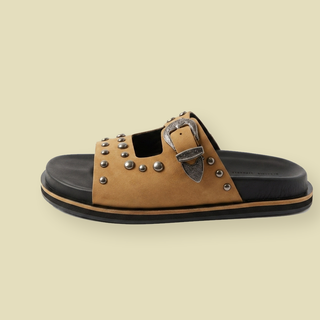
How to clean nubuck leather at home (in 3 steps):
- Dry brush first: Use a soft-bristle or crepe brush in one direction to lift loose dirt. Never apply water to dry surface dust.
- Erase surface scuffs: Gently rub a clean pencil eraser or nubuck block over stubborn marks.
- Spot clean with vinegar/water: For salt lines and dried spills, dab a cloth lightly dampened with 50/50 white vinegar and water. For oil or sunscreen, use cornflour overnight first. Let air dry completely, then brush up the nap.
There is a specific sinking feeling when a drop of rain or a streak of dust hits a fresh pair of nubuck shoes. You look down, see the dark mark on the velvet finish, and wonder if the leather is ruined. It is not. Nubuck is tough, grain leather with a sanded nap. It handles real wear beautifully once you know the golden rule: work dry first, and bring water into the routine only when you have to.
The quick answer
To clean nubuck shoes at home, brush away surface dust while dry, rub out scuffs with a nubuck eraser, and use a dedicated nubuck cleaner sparingly on stubborn spots. Air dry away from direct heat, brush the soft nap back up, and seal with a protector spray. Never use ordinary shoe polish, and never dry nubuck in the sun.
What you need
How to clean nubuck shoes with household items
You do not need a full care kit to rescue a pair tonight. Most of what works on nubuck is already in your kitchen, bathroom or desk drawer, and the rule is the same as with dedicated products: dry methods first, a little moisture only when the dry ones fail. Test anything wet on a hidden spot first, such as the inside edge of a strap or the back of the heel, and wait until it dries before judging.
| Household item | Use it for | How |
|---|---|---|
| Clean white pencil eraser | Scuffs, shiny patches, dry dirt | Short, light strokes over the mark, then brush away the crumbs. White only; a coloured eraser can leave its colour behind. |
| Soft toothbrush | Dust, dried mud, lifting the nap | A clean, dry, soft bristle brush does the job of a nubuck brush on small areas and around buckles. |
| Cornflour or talc | Fresh oil, sunscreen, food grease | Pat a thick layer onto the mark, leave it at least 8 hours or overnight to draw the oil out, then brush off. Repeat if a shadow remains. |
| White vinegar and water, 1 to 1 | Salt lines, set in dirt, dried spills | Dampen a cloth, never soak it, and dab the mark. Let it dry fully, then brush. |
| A kettle | Flattened or pressed nap | Hold the shoe 20 to 30 cm above the steam for a few seconds, then brush while the fibres are warm. |
| Microfibre cloth | Blotting spills, even misting | Blot, press and lift. Rubbing a wet mark spreads it and flattens the nap. |
| Plain white paper | Holding shape while drying | Scrunch it into the shoe or between the straps. Newspaper ink can transfer onto a pale lining. |
Leave out the things that seem like they should help. Baby wipes and makeup wipes carry oils and fragrance that leave a darker patch once dry. Dishwashing liquid and laundry detergent strip the leather and can bleach it unevenly. A melamine sponge is an abrasive and can rub colour straight off the surface.
The 7-step nubuck cleaning routine at a glance
| Step | Action | Why it matters |
|---|---|---|
| 1. Dry brush | Brush in one direction after every wear | Lifts surface grit before it embeds in the nap |
| 2. Erase marks | Rub scuffs gently with a nubuck block | Removes soil without wetting the leather |
| 3. Spot clean | Damp cloth with cleaner on stubborn spots | Treats heavy stains without soaking the hide |
| 4. Water marks | Mist the full shoe evenly, then blot dry | Prevents a tide mark from forming at the edge |
| 5. Air dry | Dry at room temperature with paper inside | Heat shrinks, stiffens and cracks nubuck |
| 6. Lift nap | Brush back and forth once fully dry | Restores the signature velvet texture |
| 7. Protect | Mist with protector spray each season | Creates an invisible barrier against moisture |
1. Brush off surface dust (Always dry)
Start dry and only add moisture if the mark truly needs it. Run a dry nubuck brush over the whole shoe in one direction to lift loose dirt and daily dust. Making this a quick habit after each wear means the rest of the routine rarely gets called on. Never brush nubuck while it is wet, because brushing wet fibres pushes grit deeper into the nap.
2. Erase scuffs and dry marks with a nubuck block
For dry scuffs, heel rubs and darker surface marks, work a dedicated nubuck eraser over the spot using short, light strokes. The block crumbles slightly as it works, lifting soiled fibres away rather than smearing them. Use your brush to sweep away any eraser crumbs once the mark is gone.
3. Spot clean stubborn stains sparingly
When a stain survives the dry brush and eraser, reach for a dedicated foaming nubuck cleaner. Apply a small amount to a clean microfibre cloth, never directly onto the leather, and work it over the mark in gentle circular motions. Keep the moisture minimal. Nubuck can watermark if oversaturated, so less product is always safer.
4. Treat water stains by misting the whole shoe
A water stain on nubuck is usually a tide line, a ring left where a splash dried unevenly. The fix sounds counterintuitive but works: even out the moisture across the entire shoe. Lightly mist the whole shoe with clean water using a fine spray bottle, rather than soaking the spot. Blot the entire surface with a dry, clean cloth. Wetting the whole shoe evenly allows it to dry to one uniform shade, preventing a fresh ring from forming at the border of the old mark.
For white salt marks after a rainy walk, allow the shoe to dry completely first, brush off the loose surface salt, then gently dab the remaining mark with a clean cloth dampened with a little diluted white vinegar. Let dry naturally, then brush.
5. Air dry slowly at room temperature (Never heat)
Always let nubuck dry naturally at room temperature, away from direct sunlight, heaters, radiators, and hairdryers. Artificial heat is the fastest way to ruin nubuck, baking the natural oils out of the hide and causing it to stiffen, shrink, and crack. Stuff the shoe with clean, unprinted paper or shoe trees to hold its shape while it dries overnight.
6. Brush the velvety nap back up
Once the shoe is completely dry, the surface will feel slightly flat or stiff. Use your nubuck brush to brush gently back and forth across the hide. This lifts the flattened fibres and restores the soft, signature velvet texture. If an area remains pressed down, hold the shoe briefly above steam from a kettle at a safe distance, then brush while the nap is warm.
7. Spray with nubuck protector for lasting defense
Apply a dedicated suede and nubuck protector spray before your first wear, holding the can roughly 15 to 20 cm away and applying light, even coats. Allow it to cure fully before taking the shoes out. Reapply every two to three months, or at the turn of each season, to maintain water repellency. In Australian conditions, seasonal protection is especially vital: summer UV fades nubuck faster, while coastal humidity can encourage mould during storage. Re-spray before hot months and store pairs in a cool, ventilated space.
How to clean nubuck sandals and their straps
Sandals collect a different kind of dirt from closed shoes. There is less rain and mud, and a lot more skin: sunscreen, body lotion, sweat and sand, all pressed into the straps by bare feet. The routine above still applies, with three additions.
- Straps: brush both the outer face and the underside of every strap, since the underside is where lotion and sunscreen build up. Treat any darkened patch with cornflour overnight before reaching for anything wet.
- Footbed and lining: wipe a leather lined footbed with a cloth that is barely damp, never wet, then leave the sandals somewhere airy for a few hours. Do not use the nubuck eraser on smooth leather; it is made for napped surfaces.
- Buckles and studs: wipe metal hardware with a dry cloth. Keep vinegar and cleaner off it, and work carefully around each stud with a soft toothbrush so you do not snag the nap at the edges.
After a beach day, knock the sandals together outside to shake out loose sand, then brush once they are dry. Sand trapped under a buckle acts like sandpaper every time you walk.

What is the difference between nubuck and suede?
Nubuck and suede both share a velvety nap, but they come from different layers of the hide, which dictates how they wear. Nubuck is crafted from the top-grain outer layer of cattle hide, lightly sanded on the outside to create a fine, dense velvet surface. Suede is created from the inner split of the hide. Because nubuck uses the tougher outer layer, it is naturally more durable, structured, and water-resistant than suede. Both, however, must never be treated with standard shoe polishes, waxes, or oils, which permanently flatten the nap and spoil the texture.
Treat nubuck as its own distinct material: use dedicated care tools, minimise moisture, and let the brushed texture speak for itself.
Can you wear nubuck shoes in the rain?
Nubuck is more water resistant than suede, but it is not completely waterproof. A light passing shower or occasional splash will not damage a pair protected with water-repellent spray, and the leather will return to its original tone once dry. Heavy rain and deep puddles should be avoided. If your shoes do become soaked, blot them immediately with a dry cloth, insert paper to preserve their shape, and air dry completely at room temperature before brushing and reapplying protector spray.
What should you never use on nubuck?
- Ordinary shoe polish, wax or oily leather conditioners. They clog the fine nap, darken the colour and ruin the velvet finish.
- A full soak under the tap. Submerging nubuck leads to tide lines, leather stiffening and structural distortion.
- Direct heat to accelerate drying. Heaters, fireplaces, radiators and hair dryers shrink and crack the hide.
- Household detergents, bleach or generic cleaning sprays. Harsh chemicals strip protective oils and discolour the leather.
- Aggressive scrubbing while the shoe is damp, when delicate surface fibres are most vulnerable to tearing.
Four real cleaning scenarios, step by step
Here is the routine applied to the marks that actually happen, with what to do, in what order, and the one thing to avoid.
1. Sunscreen on the straps after a day at the beach
Do: shake out the sand and let the sandals dry if they are damp. Pat a thick layer of cornflour over every darkened area, leave it overnight, then brush it off with a soft toothbrush. If a shadow is still there, repeat once more before trying anything wet.
Avoid: wiping the mark with a damp cloth on the day. Water on top of oil spreads the stain wider and drives it deeper into the nap.
2. Caught in a summer storm on the walk home
Do: blot the whole shoe with a dry cloth as soon as you are inside, pressing rather than rubbing. Stuff with plain white paper, change the paper after an hour, then leave the pair at room temperature for a full 24 hours. If a tide line appears once dry, mist the whole shoe evenly, blot, and dry again. Brush the nap back up, then respray with protector.
Avoid: the hairdryer or a sunny windowsill to speed it up. Fast drying is what stiffens and shrinks nubuck.
3. A splash of red wine or coffee at dinner
Do: blot immediately with a napkin, lifting straight up, to take out as much liquid as you can. At home, let it dry fully. Dab the remaining mark with a cloth dampened in the vinegar and water mix, working from the outer edge inward so you do not push the stain wider. Dry, brush, and if the mark is still visible, move on to a dedicated nubuck cleaner.
Avoid: salt or soda water poured onto the stain. Both leave their own mark on nubuck.
4. A pair that looks tired and grey after a dry season
Do: this is usually dust sitting in a flattened nap, not a stain. Brush the whole shoe firmly in one direction, then back the other way. Go over shiny patches (often at the toe or where straps rub) with a white eraser, then steam and brush any area that stays flat. Finish with a fresh coat of protector.
Avoid: a colour renovator spray as a first step. Most dull nubuck comes back with a brush alone.
Six nubuck cleaning mistakes and how to fix them
- Spot wetting a water mark. Dabbing only the stain creates a new ring around it. Mist the whole panel or shoe evenly so it dries to one shade.
- Rubbing a fresh spill. Rubbing spreads the liquid and crushes the nap. Blot, press and lift.
- Brushing while damp. Wet fibres tear and mat. Wait until the shoe is completely dry, usually 24 hours.
- Spraying protector too close. Closer than 15 cm, the spray lands wet and can darken the colour in patches. Hold it 15 to 20 cm away and build light coats.
- Skipping the patch test. Vinegar, cleaner and protector can all shift the shade slightly. Try each one on a hidden spot first.
- Storing in a plastic bag. Plastic traps humidity, and humid storage is how mould starts. Use a breathable cotton dust bag or the original box, somewhere cool.
How to keep nubuck shoes clean: the care checklist
Keeping nubuck clean is mostly about the thirty seconds after you take them off. Screenshot this.
After every wear
- Brush in one direction to lift dust.
- Check for fresh marks while they are easy to treat.
- Let sandals air for an hour before putting them away.
Every season, or every two to three months
- Brush thoroughly, erase scuffs and steam any flattened areas.
- Respray with nubuck protector, 15 to 20 cm away, in light coats.
- Store in a breathable bag, out of direct sun, with paper inside to hold the shape.
Frequently asked questions
How often should you brush nubuck shoes?
A brief dry brushing after each wear is ideal. It takes only a few seconds and prevents fine dust from embedding in the nap, keeping the velvet finish fresh and eliminating the need for frequent wet cleaning. Once a season, give them a longer brush in both directions to lift the whole nap.
Can you use a suede protector on nubuck?
Yes. Most quality care sprays are formulated for suede and nubuck together because both share a napped surface. Always check the label and test on a discreet spot before applying across the full shoe. Apply it to clean, dry shoes only, since protector sprayed over dirt seals the dirt in.
Will rain ruin nubuck shoes?
Not usually, provided they have been treated with protector spray and the rain is light. Nubuck handles moisture better than suede and returns to its original shade once dry. If thoroughly soaked, blot excess moisture and air dry naturally. Allow a full 24 hours before brushing, and if a tide line appears, mist the whole shoe evenly and dry it again.
How do you restore faded or flattened nubuck?
Start with a dry brush, as lifting the flattened nap often revives the colour and texture immediately. For colour that has genuinely faded over seasons, a colour renovator spray made specifically for nubuck can restore depth. For stubborn stains, consult a professional cobbler. Pressed areas, such as where a strap or the top of the foot creases, respond well to a few seconds of kettle steam followed by a brush.
How should I care for Dakota and Sloane?
Follow the 7 steps in this guide. Dakota and Sloane are nubuck leather sandals, so brush them after wear, spot treat marks with an eraser, and apply protector spray each season. Inside, they have a memory foam insole and a leather lining. Expect some change on the outside too: we made this nubuck to soften and develop a patina with wear, so aim for clean, not factory new. As sandals, they also need the strap and hardware care above: brush the underside of the straps, treat sunscreen marks with cornflour, and wipe the buckle and studs with a dry cloth.
Can you wash nubuck shoes in the washing machine?
No. A washing machine soaks the leather through, which leads to tide lines, stiffness and a shoe that can lose its shape. Heat from a dryer makes it worse. Clean nubuck by hand with a brush, an eraser and as little moisture as possible, and use a dedicated foaming cleaner only for heavy soiling.
Does this routine work on nubuck sneakers and boots?
Yes. The same seven steps apply to any nubuck upper. On sneakers, clean rubber soles and midsoles separately with a damp cloth, keeping water off the nubuck. On boots, pay extra attention to salt lines and water marks, and respray protector more often through a wet winter.
Shop the look
The pieces from this guide, ready to wear.

The flat that gets asked about first, in blue nubuck with a brushed, matte finish that softens with wear. A memory foam insole underneath, so a beautiful flat is one you can actually wear all day.

The pair you reach for until you wear it out, in a warm tan nubuck that sits beside every neutral you own. Memory foam underfoot, so the shoe you reach for is also the one you can wear longest.
Nubuck worth taking care of
Dakota and Sloane are nubuck flats built to be worn, not saved for best. Memory foam insole, designed in Australia.
Explore Sloane & Dakota Nubuck Sandals →Free standard shipping on every order Australia-wide. Both pairs carry a memory foam insole.
More from the Style Guide: our guide to comfortable flat sandals and the full guide to choosing women's shoes. Or explore the sandals collection. For a deeper care reference, the Saphir suede and nubuck care guide is a trusted source.